
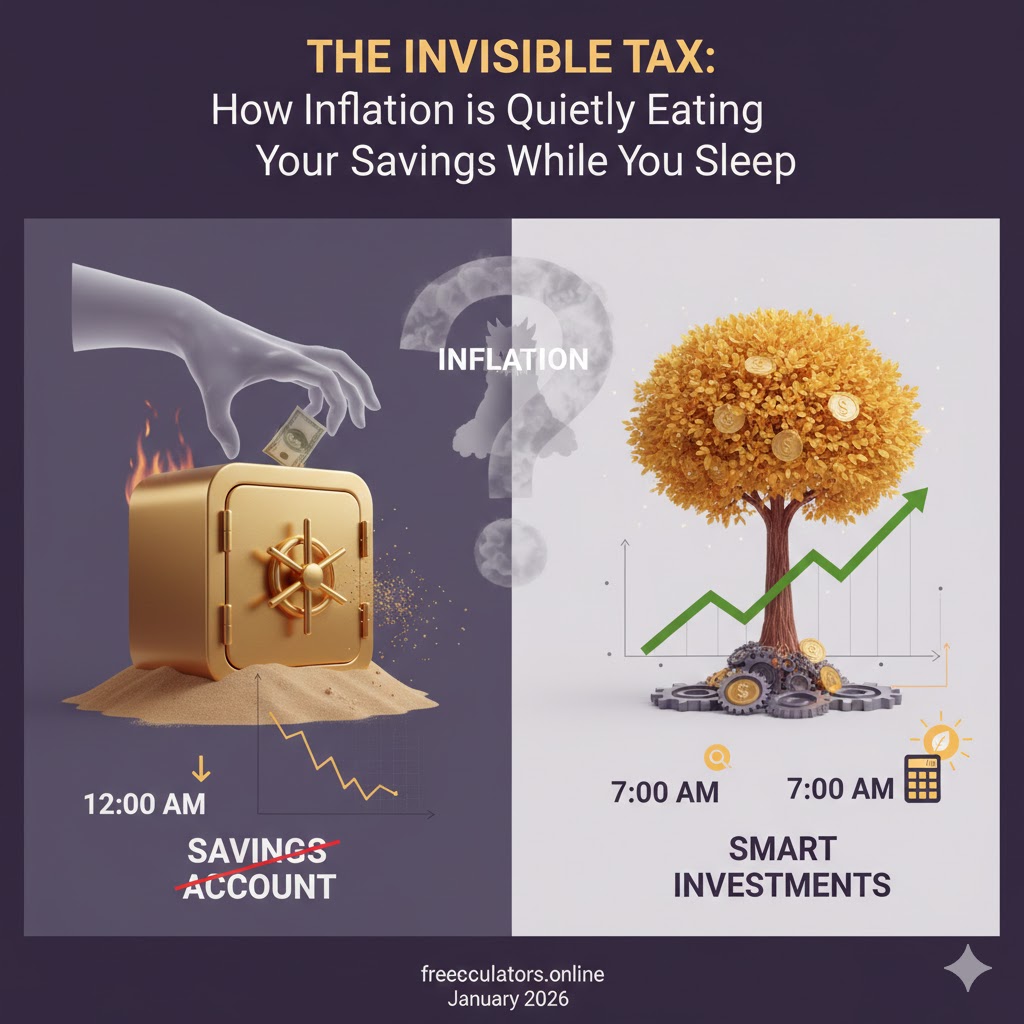
Imagine you have a high-tech safe in your room where you’ve locked away $1,000 for a rainy day. You keep the key safe, and five years later, you open it. The money is still there, ten crisp hundred-dollar bills. But there’s a catch: the world outside has moved on. The laptop that cost $1,000 five years ago now costs $1,500.
This is Inflation, often called “The Invisible Tax.” It isn’t a bill sent to you by the government; it is the silent erosion of your hard-earned money’s value. If your money isn’t growing faster than the cost of living, you aren’t just standing still you are falling behind.
My Personal Realization: The 50-Cent Milk Myth
I remember a time when my mother would hand me a small bill and send me to the store, and I’d come back with two gallons of milk and some change. Today, that same amount of money barely covers a single carton.
Last year, I sat down to look at my bank balance and felt a surge of pride. I had saved more than ever before. But when I went to upgrade my home office equipment, I realized that the prices had jumped so significantly that my “increased” savings actually bought me less than they would have six months ago. It hit me hard: I was saving, but I wasn’t practicing “Smart Finance.” I was falling into the same trap we discussed in The 2026 Subscription Trap: Coffee 2.0—where small, unnoticed leaks were draining my future wealth.
The Math of 2026: Why Savings Accounts are Traps

In 2026, inflation rates are shifting faster than traditional banking can keep up with. Most people keep their emergency cash in a standard “Savings Account,” thinking it’s the safest place to be. Let’s look at the math:
- If your bank offers you a 5% annual interest rate.
- But the national inflation rate is sitting at 8%.
- In reality, you are losing 3% of your wealth every single year.
This is the “Invisible Tax” in action. Your bank balance goes up, but your “Purchasing Power” goes down. You are working harder for money that is doing less for you.
How to Fight Back: Turning Savings into Wealth

Beating inflation isn’t about working more hours; it’s about making your money work for you.
- Stop Hoarding Idle Cash: Keep only what you need for immediate emergencies. Anything extra sitting in a 0% interest account is losing value every second.
- Invest in Assets, Not Liabilities: Gold, Real Estate, and diversified Stocks are “hedges.” Historically, their value rises alongside inflation, protecting your nest egg.
- Compound Interest is Your Best Friend: As we explored in The Power of Compound Interest, small, consistent investments in assets can turn into a mountain of wealth over time.
The Psychology of Spending in 2026

Inflation doesn’t just hurt your wallet; it messes with your head. When we see prices rising, the natural instinct is “Panic Buying” spending money now because “it will be more expensive tomorrow.”
However, the smart move is “Value Investing.” I’ve made it a rule now: every expense that doesn’t add long-term value to my life is a red flag. I no longer just look at the price tag; I look at the “inflation-adjusted cost” of waiting versus buying.
The “Emergency Fund” Math

People often ask me, “If inflation is eating my money, should I stop saving entirely?” Absolutely not! You still need a safety net. Your first goal should be an Emergency Fund covering at least 6 months of expenses. But once that’s built, every dollar after that belongs in an investment vehicle, not under a mattress.
Many people ask me, “If inflation is eating my money, should I stop saving entirely?” The answer is a firm no but with a twist. Savings are essential, but they must have a specific purpose. Your first goal should be an Emergency Fund that covers at least 6 months of your living expenses. This isn’t money you aim to “grow”; it is money you “protect” so you never have to borrow during a crisis.
Final Thoughts: Don’t Be a Spectator
Inflation is like a tide. If you stand still in the water, it will eventually pull you under. But if you build a boat through smart investments, that same tide will lift you higher.
At frecalculators.online, we don’t just want to give you tools; we want to give you the clarity to see the numbers for what they really are. Take a look at your savings today: Is your money sleeping, or is it working? Don’t let the “Invisible Tax” be the reason you miss out on your dreams.