
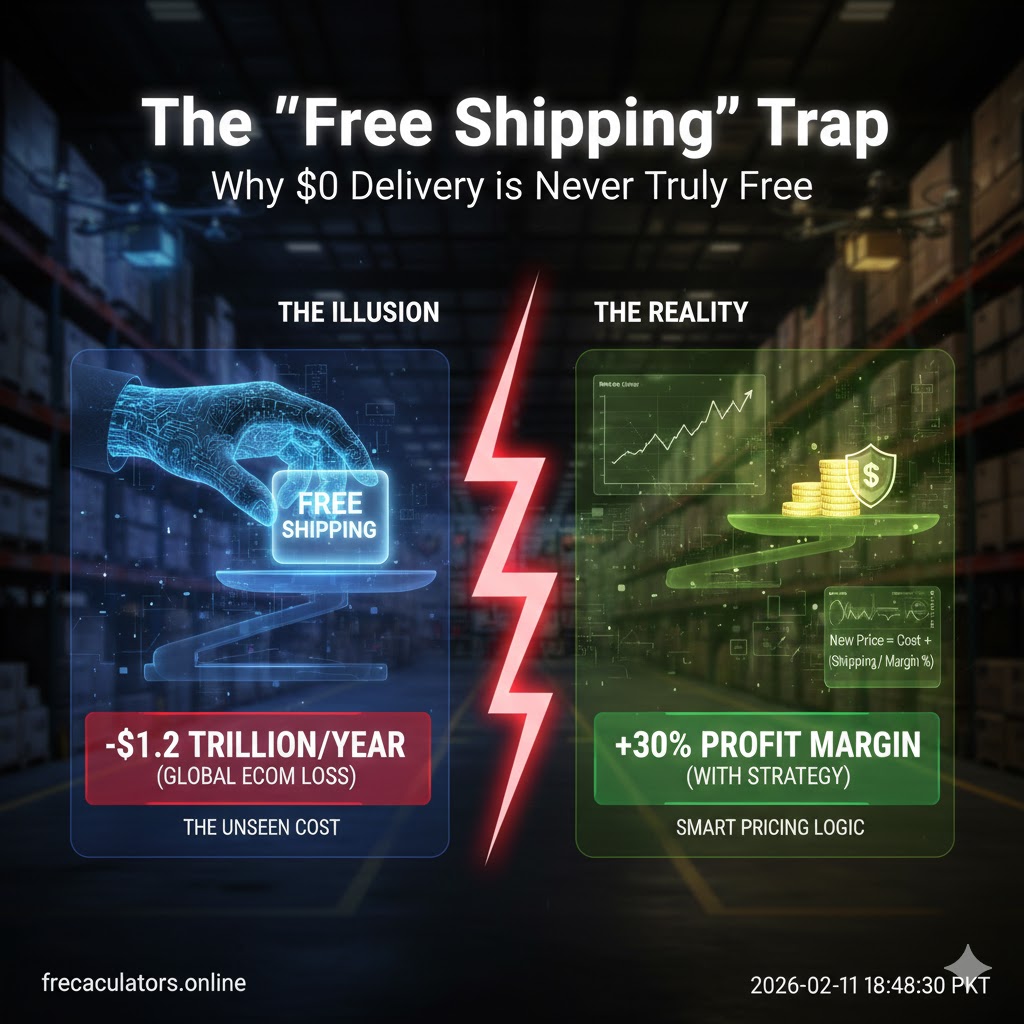
In the world of online shopping, two words have more psychological power than a 90% discount: “Free Shipping.” As a consumer, it feels like a win a small gift from the brand. As a seller, however, it often feels like a slow, invisible leak in your bank account. If you are running an e-commerce store in 2026, you already know that shipping costs have plummeted into a chaotic state due to fuel surcharges, labor shortages, and global logistics complexity.
But here’s the cold, hard truth: If you aren’t calculating the “Free Shipping Trap” with mathematical precision, you aren’t running a business you’re running a charity. In this guide, we will dissect the math behind “Free” and show you exactly how to adjust your pricing so your customers stay happy and your profit margins stay healthy.
The Psychological Bait: Why Our Brains Hate Shipping Fees

“The Human Logic: Why we’d rather pay $25 for a shirt with free shipping than $18 for the same shirt with $5 shipping.”
It makes no sense on paper, right? $18 + $5 is $23. That is objectively cheaper than $25. Yet, conversion data consistently shows that the $25 “Free Shipping” offer will outsell the cheaper option by nearly double. Why? Because human psychology isn’t built on pure math; it’s built on friction and emotional reward. Shipping costs represent “pain” in the buyer’s journey. When a customer reaches the final checkout page and sees a shipping fee added to the total, it feels like an unexpected tax or a penalty for living where they do. This leads to “Cart Abandonment,” the silent killer of e-commerce. On the other hand, bundling that cost into the product price makes the purchase feel “clean.” The customer feels they are paying for a premium product rather than a logistical service. I’ve seen dozens of small businesses on Shopify and Daraz fail because they offered free shipping to “stay competitive” without touching their base price. They saw their revenue numbers climb, but their bank balance stagnated. They fell into the trap.
Dissecting the Trap: The Invisible Costs You’re Ignoring
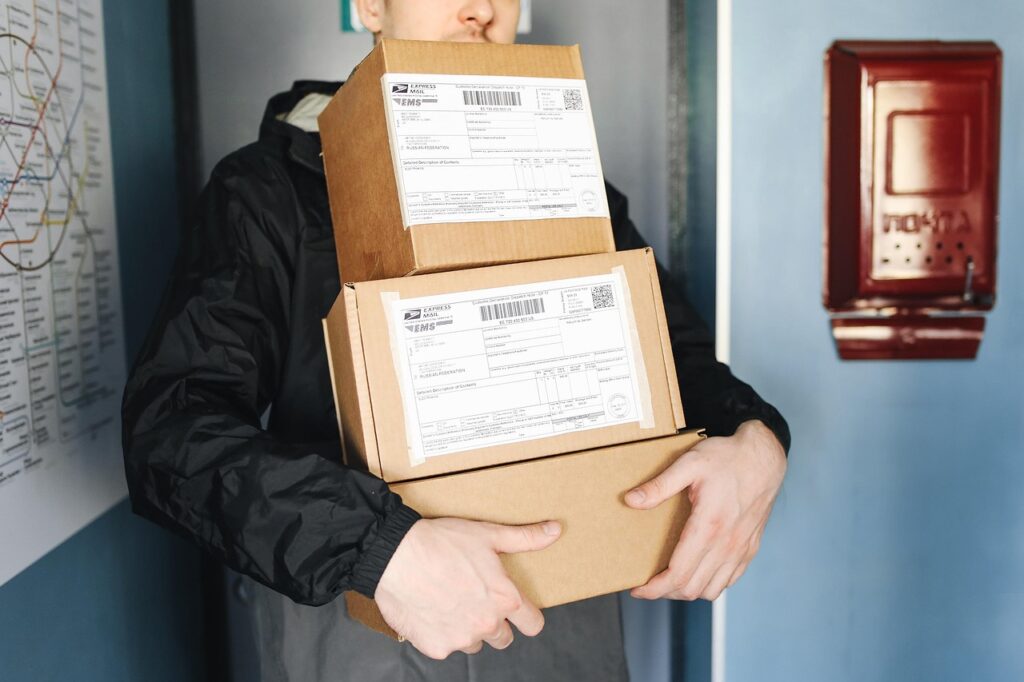
“Shipping is more than just the courier fee; it’s an operational ecosystem.”
Most sellers think shipping cost is simply the amount the courier company (like FedEx or TCS) charges them. That is mistake number one. To calculate your true shipping overhead, you need to look at the “Micro-Costs” that aggregate over time:
- Packaging Materials: The box, the tape, the bubble wrap, the tissue paper, and that “thank you” note you include. For a premium brand, packaging can cost between $0.50 to $2.00 per order.
- Labor & Handling Time: Your time is money. If it takes you or an employee 15 minutes to pick, pack, and label an order, you must calculate that labor cost. If you’re paying someone $15/hour, every package has a $3.75 “Human Tax” attached to it.
- The Return Factor: This is where the trap snaps shut. If you offer free shipping on the way out, what happens when the customer returns the item? If you also cover return shipping, you have now paid for two courier trips on a zero-revenue transaction.
- Dimensional Weight (DIM): In 2026, carriers charge based on how much space a box takes up, not just its weight. A light but bulky pillow can cost more to ship than a heavy but small dumbbell.
The Recovery Formula: The Math of “Free”

“How to increase your price without triggering ‘Price Shock’ in your customers.”
To offer free shipping without losing your profit, you need to find your Breakeven Increase. You cannot just guess. If you simply add the shipping cost to the price, your Profit Margin Percentage actually decreases because your total revenue is higher while your absolute profit remains the same.
Let’s look at the “Margin Erosion” example:
- Product Cost: $10
- Original Price: $20 (Gross Profit: $10 | Margin: 50%)
- Shipping Cost: $5
- New Price (if you just add shipping): $25 (Gross Profit: $10 | Margin: 40%)
To maintain your original 50% margin, you would actually need to sell that product for $30 if you include shipping. Many sellers ignore this and find themselves with high sales volume but no cash flow to reinvest in inventory. Use a Profit Margin Calculator to run these scenarios before changing your storefront.
2026 Strategy: How to Beat the Trap
“Moving from ‘Universal Free Shipping’ to ‘Strategic Incentives’.”
You don’t always have to hike the price of every single item. Here are three professional tactics used by top-tier e-commerce brands:
1. The “Threshold” Strategy (AOV Booster)
Instead of free shipping on everything, offer it only on orders over a specific amount (e.g., “Free Shipping on orders over $50”).
- The Logic: This nudges the customer to add “filler items” to their cart to hit the limit. If your Average Order Value (AOV) increases, the shipping cost becomes a smaller percentage of the total transaction, making it easier for you to absorb.
2. The “Bundling” Method
If an item costs $10 to ship, it likely only costs $12 to ship three of them in the same box. By selling 3 units as a “Value Pack” with free shipping, you use the logistics savings to fund the marketing “Free” offer.
3. Location-Based Logic & Real-Time Rates
Modern calculators allow you to offer free shipping only to specific “Local Zones.” In 2026, it is suicide to offer free shipping to a remote mountain region if your warehouse is in the city. Use tools to detect the user’s IP and show “Free Shipping” only when the math makes sense.
Conclusion: Integrity Over Illusion
“Your customers value transparency as much as they value ‘Free’.”
Don’t be afraid to charge for shipping if your product is heavy, low-margin, or fragile. The most successful brands in 2026 are those that are honest about their costs. However, if you choose the “Free Shipping” route, do it with your eyes wide open and your calculator ready.
Before you click “Save” on your shipping settings, run a simulation. Use the Free Shipping Impact Calculator to see exactly how many more sales you need to make for “Free Shipping” to actually be more profitable than “Paid Shipping.” Sometimes, the math will tell you to keep shipping paid and that’s a winning business decision.