
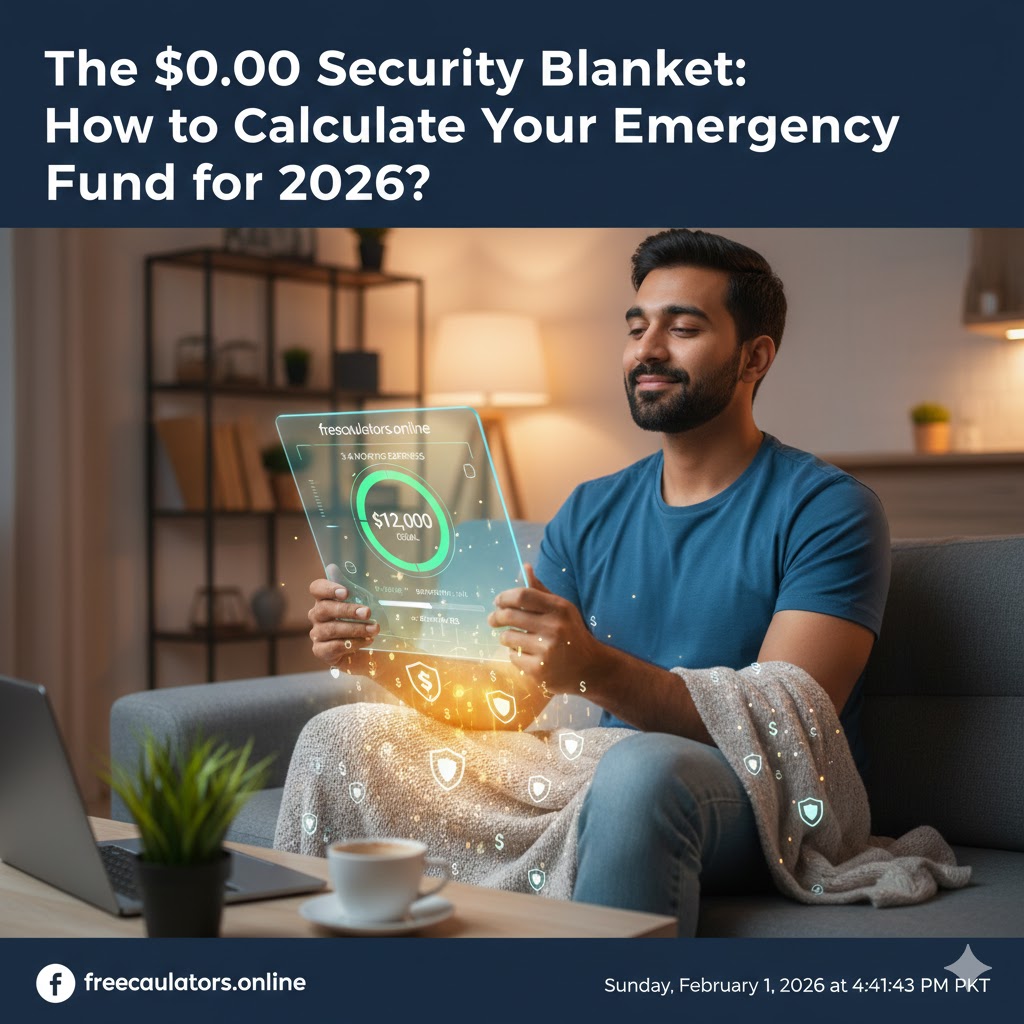
A few years ago, I woke up at 3:00 AM with a racing heart, not because of a nightmare, but because of a spreadsheet. I realized that if my car broke down or if I faced a sudden medical bill, I had exactly zero dollars to cover it. Living “paycheck to paycheck” felt like walking a tightrope without a net one gust of wind, one stroke of bad luck, and everything would come crashing down. That feeling of constant vulnerability is what finally pushed me to stop guessing and start calculating my financial safety net.
The “What If” Nightmare

Life rarely moves in a straight line. Engines fail, roofs leak, and unexpected health issues don’t wait for your next bonus. For a long time, I lived in a state of “Hand to Mouth” existence where even the sound of a doorbell or an unscheduled phone call triggered anxiety about a potential new expense. I eventually realized that living without a backup plan isn’t just risky; it’s like jumping out of a plane and hoping you’ll learn how to fly before you hit the ground.
My Personal Experience: The Job Loss Reality

When my company announced sudden “downsizing” back in 2023, the reality hit me like a ton of bricks: I had only two weeks’ worth of cash in my drawer. Those fifteen days were some of the darkest of my life because I didn’t know where my next meal let alone my rent would come from. That day, I made a solemn vow to myself: I would never let my survival depend on a single paycheck again. I began researching the “Emergency Fund” concept and realized it wasn’t just “extra money”; it was a non-negotiable requirement for sanity.
1. What is an Emergency Fund?

An emergency fund is money set aside strictly for life’s unplanned disasters. This isn’t your vacation fund, your new iPhone budget, or your wedding savings it is your “Survival Fund.” Most financial experts agree that you should have at least 3 to 6 months’ worth of essential living expenses saved up. This means that if your income stopped entirely today, you could still maintain your basic lifestyle for half a year without borrowing a single cent.
2. The Math Behind the Peace of Mind

A common mistake people make is trying to save based on their “Net Salary,” but the real secret is focusing on “Essential Expenses.” You need to calculate the cold, hard numbers for rent, utilities, groceries, and basic insurance. For example, if your bare-minimum monthly survival cost is $2,000, your ultimate goal should be $12,000. While that number might look intimidating at first, seeing it clearly on paper is the first step toward making it a reality.
3. Accuracy is Everything
Estimating your numbers in your head is a trap because our brains tend to “forget” small, recurring costs that eat away at our wealth. This is why I always use frecalculators.online to ensure my calculations are accurate down to the last digit. Their financial planning tools allow you to input your specific monthly costs and instantly see your 3-month and 6-month safety targets. It even helps you determine how long it will take to reach your goal based on what you can afford to save today.
4. Where to Keep This Money?

Your emergency fund should never be kept in risky places like volatile stocks or high-stakes crypto. The purpose of this money isn’t to generate massive profits; it’s about “Liquidity,” meaning you need to be able to touch it the second a crisis hits. Keep it in a high-yield savings account that is separate from your daily spending account. When the money is “out of sight,” it stays “out of mind” for impulsive spending, but remains ready for when the car engine finally decides to quit.
5. Start Small, But Start Today

You don’t need to save thousands of dollars overnight to feel the benefits. I started with just $50 a month, and even that tiny “Start” began to melt away the layers of financial fear I had been carrying. By tracking my progress on frecalculators.online, I felt a sense of calm every time the “Days of Survival” counter went up. Remember, the biggest risk isn’t a bad market it’s living a life without a plan.
Conclusion
An emergency fund isn’t just a bank balance; it’s “Peace of Mind” that you can actually buy. When your backup is ready, your brain stops worrying about survival and starts focusing on growth, creativity, and new opportunities. Head over to frecalculators.online today, calculate your survival target, and lay the first brick of your financial fortress. Preparation for tomorrow begins with the math you do today.