
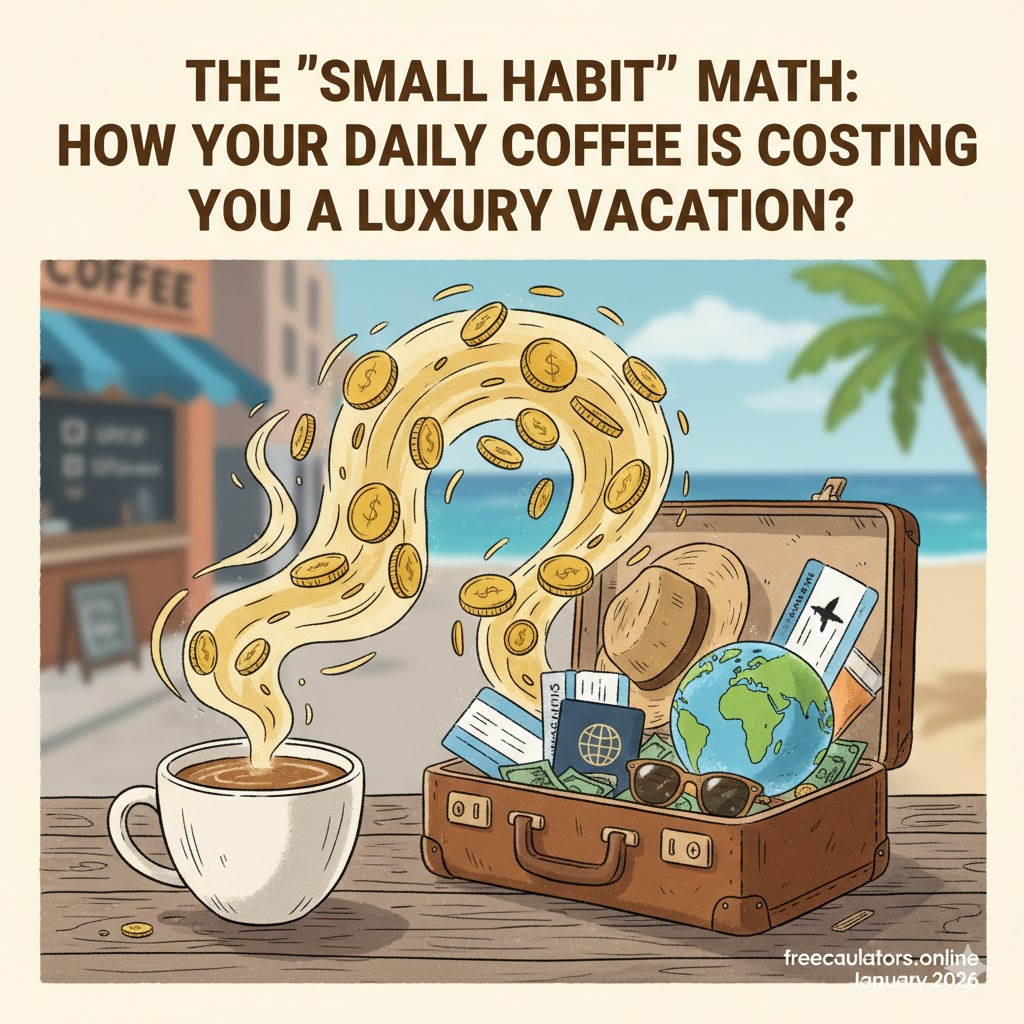
Most of us believe that financial ruin is the result of one big, catastrophic mistake like buying a house we can’t afford or blowing a fortune on a lavish wedding. But the reality is far more subtle and, in a way, more dangerous. The hole in our pockets isn’t usually caused by the big “spending waves” but by the tiny “spending leaks” we ignore every single day.
Think about that daily cup of premium coffee, the impulsive food delivery because you were “too tired to cook,” or that monthly app subscription you forgot to cancel. We dismiss these as “just a few dollars.” However, these small habits aren’t just ripples in a pond; they are like termites. They silently hollow out your savings from the inside until there’s nothing left. Today, we are going to look at the math the kind of math we champion at FreeCalculators. online to show you how your caffeine habit might actually be a stolen trip to the Maldives or Turkey.
The Math of the ‘Latte Factor’
In the world of personal finance, this phenomenon is famously called “The Latte Factor.” Let’s break down the numbers, because numbers don’t have emotions they only have the truth.
Imagine you buy a high-end coffee every work day. In today’s market, a good latte or cappuccino costs roughly $5 to $7 (or 700-800 PKR).
- Daily: $6.00
- Monthly (22 Working Days): $132.00
- Yearly: $1,584.00
Over $1,500 a year! For many, that is the exact price of a round-trip flight to Europe or a week-long stay in a luxury resort in Bali. We fail to see this because our brains are wired to focus on the “now.” We see the $6 today; we don’t see the $1,500 at the end of the year. This is a cognitive bias that keeps us broke while making big corporations rich.
My Personal Realization: The Day I Checked My Statement (The Turning Point)
I want to share a vulnerable moment from my own life. A few years ago, I was constantly stressed. On paper, my salary was great, but by the 25th of every month, I was checking my bank balance with a knot in my stomach. I felt like I was working hard for nothing.
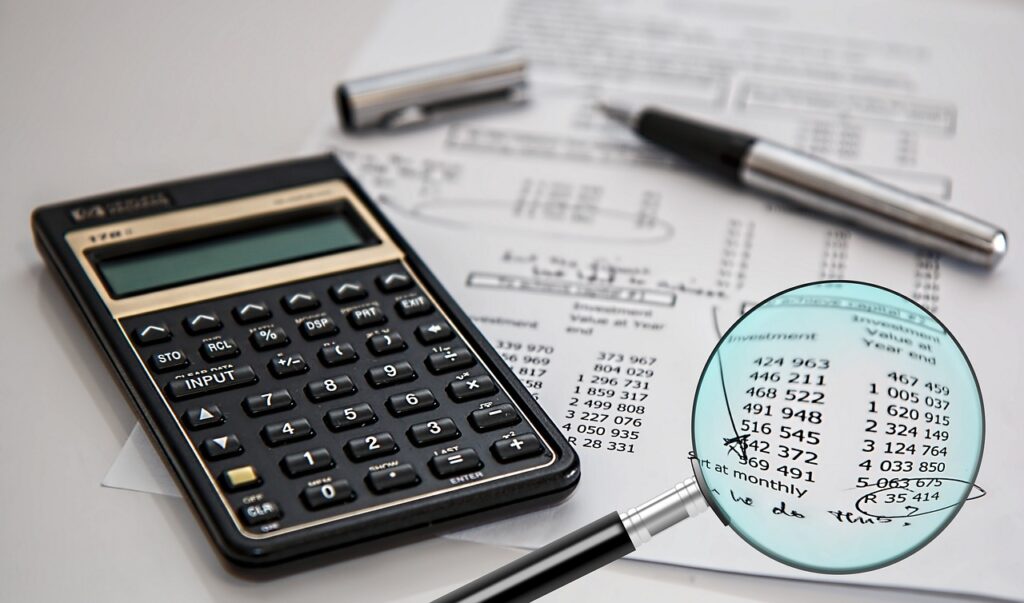
One Saturday morning, I sat down with a cup of home-brewed tea and printed out my last three months of bank statements. I took a red pen and highlighted every “non-essential” expense. What I saw made me feel sick. I had spent nearly $400 a month on food delivery apps and “convenience” coffees. In just one year, I had literally eaten and drank a brand-new MacBook Pro.
I felt betrayed not by the banks, but by my own lack of discipline. I realized that my “daily treats” were actually a form of self-sabotage. That day, I implemented the “24-Hour Rule.” If I wanted to buy something that wasn’t a basic necessity, I forced myself to wait 24 hours. In 90% of cases, the “must-have” feeling vanished by the next morning. This type of psychological discipline is exactly what we discussed in our previous article, The Deepfake Call: 3 Minutes to Lose Your Savings, where we explored how urgency and emotions are used to manipulate our financial decisions.
The 2026 Subscription Trap: Coffee 2.0

As we navigate 2026, the problem has evolved. It’s no longer just about coffee; we are living in a “Subscription Economy.”
- Streaming services (Netflix, Disney+, HBO)
- Music and Cloud storage
- Premium “Ad-Free” versions of every social app
- Gym memberships you haven’t used since January
Each of these is a “small habit” expense. Scammers and corporations alike love subscriptions because they rely on “set it and forget it.” They know that if they take a small amount every month, you likely won’t notice. But when you aggregate 10 different subscriptions, you are looking at thousands of dollars a year leaving your account for services you barely use.
The Power of Compound Interest: Turning Caffeine into Gold
What if you didn’t just save that coffee money, but you put it to work? This is where the math gets exciting. If you took that $132 a month and invested it in a standard index fund or a high-yield savings account with an average 8% return:
- In 5 Years: You wouldn’t just have $7,900; you would have nearly **$10,000.**
- In 10 Years: That coffee habit transforms into $24,000.
That is not just a vacation; that is a down payment on a house or a fund for your child’s education. By choosing the coffee, you aren’t just spending money; you are spending your future time and future freedom.
How to Break the Cycle Without Losing Your Joy

I’m not here to tell you to live a miserable life of deprivation. Financial health is about balance, not boredom. Here is how to reclaim your vacation fund:
- Become Your Own Barista: Invest in a high-quality coffee machine or a French press. The initial $200 investment will pay for itself in less than two months.
- The ‘Multiplier’ Test: Before any small purchase, multiply the price by 12 (for a year) or 60 (for 5 years). If that $10 monthly app suddenly looks like $600 of your hard-earned money, you’ll find it much easier to hit ‘Cancel.’
- The Treat Strategy: Make outside coffee a reward, not a routine. Save it for a Friday afternoon or a meeting with a friend. This restores the “value” of the experience.
Final Thoughts: Your Future Self is Watching
The road to financial freedom isn’t paved with lottery wins; it’s paved with small, conscious choices. When you look at your daily habits through the lens of “Math,” the world changes. Your “Small Habit” isn’t just a cup of coffee it’s a choice between a moment of flavor and a lifetime of security.
The next time you’re standing in line, about to tap your card for that $7 latte, ask yourself: “Do I want this coffee, or do I want the beach in Turkey?”
At frecalculators.online, we believe that clarity is the first step to wealth. Stop the leaks, start the savings, and let the math work for you.